
Fiche variétale
Section scientifique et variétale
Arauco
Une variété devenue territoire
Dans les Amériques, Arauco n'est pas une variété introduite de manière marginale, mais une présence structurante, profondément enracinée dans certains territoires d'Amérique du Sud. En Argentine en particulier, la variété Arauco s'affirme comme une variété identitaire, liée à des paysages oléicoles spécifiques où la culture de l'olivier a construit au fil du temps une relation étroite avec le climat, l'eau et les communautés locales.
Sa diffusion s'étend également à d'autres territoires américains, souvent sous des dénominations différentes, comme au Pérou et au Chili, où des variétés historiquement connues sous les noms de Criolla ou Azapa partagent le même horizon agricole et culturel.
Dans ces contextes, Arauco ne représente pas une migration récente, mais le résultat d'un long processus d'adaptation qui a donné naissance à de grands paysages oléicoles extra-méditerranéens, façonnés par l'interaction entre variété, territoire et pratiques agricoles locales.
Identité et synonymes
Arauco est une cultivar à forte identité américaine, particulièrement liée à l'histoire oléicole de l'Argentine. Elle est considérée comme une variété à double aptitude, utilisée à la fois pour la production d'olives de table et pour l'extraction d'huile.
Son identité est liée à la sélection et à l'adaptation de matériel oléicole introduit en Argentine depuis l'Espagne. Dans différents territoires sud-américains, elle peut être associée à des dénominations locales, parfois proches de variétés historiques comme Criolla ou Azapa, confirmant la complexité de l'histoire variétale de l'olivier dans les Amériques.
Diffusion dans les Amériques
La diffusion d'Arauco est concentrée dans les Amériques. La variété est profondément liée à l'Argentine, où elle a acquis une valeur identitaire dans le paysage oléicole national et en particulier dans les zones chaudes et arides les plus adaptées à la culture de l'olivier.
Sa présence témoigne de la capacité de l'olivier à s'adapter à des contextes extra-méditerranéens, en développant de nouvelles géographies productives et culturelles. En Amérique du Sud, Arauco représente l'un des exemples les plus significatifs de l'enracinement de l'oléiculture hors du bassin méditerranéen.
Considérations agronomiques et commerciales
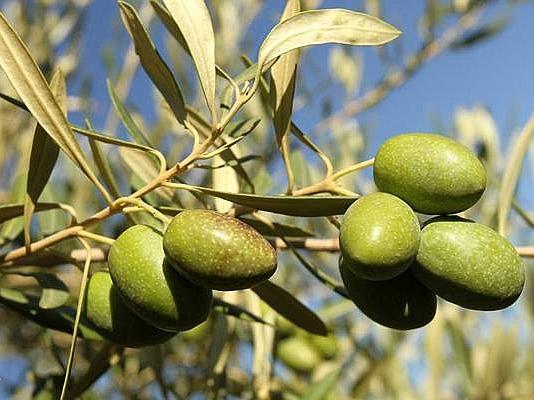
Cette variété a probablement été obtenue par la sélection de semis d'olivier introduits en Argentine depuis l'Espagne. Elle s'adapte bien aux milieux chauds et arides et s'est diffusée grâce à son excellente qualité productive, en particulier pour la dimension et la couleur des fruits ainsi que pour le rapport élevé pulpe/noyau.
Elle est partiellement autofertile. La floraison a lieu à une époque intermédiaire et l'entrée en production est également moyenne. Son pollen possède une forte capacité germinative. La productivité est élevée, même si la variété peut présenter une alternance de production.
Le fruit présente une forte résistance au détachement et, grâce à la bonne consistance de sa pulpe, peut être utilisé dans différentes méthodes de préparation. La pulpe se sépare également facilement du noyau. Arauco est une variété vigoureuse, mais sensible aux basses températures et à diverses maladies, notamment la verticilliose (Verticillium dahliae), la tuberculose de l'olivier (Pseudomonas savastanoi) et l'anthracnose de l'olivier (Gloeosporium olivarum). Elle tolère toutefois les sols arides, salins et calcaires.
Présence territoriale et valeur culturelle
Arauco représente la capacité de l'olivier à voyager, à s'enraciner et à acquérir une identité propre dans des terres lointaines. Son histoire rappelle que la biodiversité oléicole n'appartient pas à un seul paysage, mais se forme aussi à travers les migrations, les adaptations et les nouveaux liens entre peuples et territoires.
En ce sens, Arauco n'est pas seulement une variété argentine : elle est un témoignage vivant du rapport entre la mémoire méditerranéenne et la nouvelle géographie de l'olivier dans les Amériques.
The Garden of Peace
Section culturelle et symbolique
Arauco dans le projet The Garden of Peace
Arauco invite à regarder l'olivier comme une présence capable de traverser les frontières, de préserver la mémoire et de créer de nouvelles relations entre des terres éloignées.
L'olivier comme langage partagé
Dans le projet The Garden of Peace, Arauco rappelle que l'olivier peut devenir un langage commun entre les peuples, les territoires et les cultures. Sa présence dans la collection internationale témoigne de la capacité d'une même espèce à créer des relations et des significations partagées à travers les continents et les traditions.
Biodiversité et dialogue
Dans les Jardins de la Paix, la biodiversité représente aussi un patrimoine culturel. Chaque variété contribue à construire un récit collectif fait de différences, d'adaptations et de connaissances partagées, transformant la diversité biologique en un instrument de dialogue entre communautés et peuples.
Éducation et responsabilité
La présence d'Arauco dans la collection internationale renforce la mission éducative de The Garden of Peace. Chaque olivier devient une occasion de réflexion sur la relation entre l'être humain, l'environnement et la mémoire, en promouvant une culture de paix fondée sur la connaissance, le respect et la responsabilité partagée.
La collection variétale de The Garden of Peace rassemble les 28 variétés d'olivier représentées dans les Jardins de la Paix du monde. Chaque Jardin peut accueillir une sélection spécifique de cette collection.