
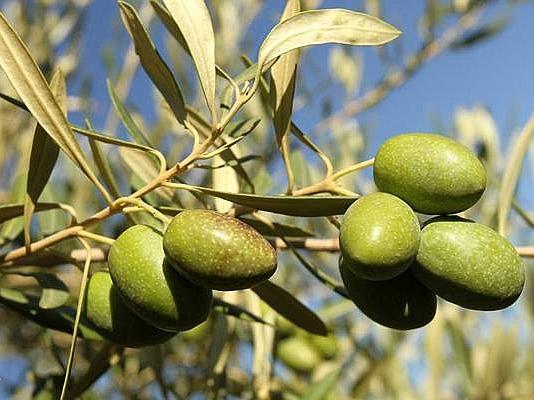
Varietal profile
Scientific and varietal section
Arauco
A variety that became a territory
In the Americas, Arauco is not a marginally introduced variety, but rather a deeply rooted and structurally important presence in several regions of South America. In Argentina in particular, Arauco has become an identity variety, closely linked to specific olive-growing landscapes where olive cultivation has developed a strong relationship with climate, water resources and local communities.
Its distribution extends to other American territories, often under different local names, as in Peru and Chile, where varieties historically known as Criolla or Azapa share a similar agricultural and cultural background.
In these contexts, Arauco does not represent a recent migration but rather the result of a long process of adaptation that has shaped important extra-Mediterranean olive landscapes through the interaction of variety, territory and local agricultural practices.
Identity and synonyms
Arauco is a cultivar with a strong American identity, particularly linked to the olive-growing history of Argentina. It is considered a dual-purpose variety, used both for table olives and olive oil production.
Its identity is associated with the selection and adaptation of olive material introduced into Argentina from Spain. In different South American regions, it may be associated with local denominations, sometimes related to historical varieties such as Criolla or Azapa, reflecting the complexity of olive varietal history in the Americas.
Distribution in the Americas
The distribution of Arauco is concentrated in the Americas. The variety is deeply associated with Argentina, where it has acquired a strong identity value within the national olive-growing landscape, particularly in warm and arid areas suitable for olive cultivation.
Its presence demonstrates the olive tree's ability to adapt to extra-Mediterranean environments, creating new productive and cultural geographies. In South America, Arauco represents one of the most significant examples of olive cultivation becoming established outside the Mediterranean basin.
Agronomic and commercial considerations
This variety was probably obtained through the selection of olive seedlings introduced into Argentina from Spain. It adapts well to hot and arid environments and became widespread due to its excellent productive qualities, particularly fruit size, colour and high flesh-to-pit ratio.
It is partially self-fertile. Flowering occurs at an intermediate period and fruit production also begins at an intermediate stage. Its pollen has a high germination capacity. Productivity is high, although the variety may exhibit alternate bearing.
The fruit has high resistance to detachment and, thanks to its firm flesh, can be used for various processing methods. The flesh also separates easily from the pit. Arauco is a vigorous variety but is sensitive to low temperatures and several diseases, including Verticillium wilt (Verticillium dahliae), olive knot (Pseudomonas savastanoi) and anthracnose (Gloeosporium olivarum). However, it tolerates arid, saline and calcareous soils.
Territorial presence and cultural value
Arauco represents the ability of the olive tree to travel, take root and develop its own identity in distant lands. Its history reminds us that olive biodiversity does not belong to a single landscape but is also shaped through migration, adaptation and the creation of new relationships between peoples and territories.
In this sense, Arauco is not simply an Argentine variety: it is a living testimony to the relationship between Mediterranean memory and the new geography of olive cultivation in the Americas.
The Garden of Peace
Sección cultural y simbólica
Arauco en el proyecto The Garden of Peace
Arauco invita a contemplar el olivo como una presencia capaz de atravesar fronteras, conservar la memoria y crear nuevas relaciones entre territorios lejanos.
El olivo como lenguaje compartido
En el proyecto The Garden of Peace, Arauco recuerda que el olivo puede convertirse en un lenguaje común entre pueblos, territorios y culturas diferentes. Su presencia en la colección internacional demuestra la capacidad de una misma especie para generar relaciones y significados compartidos a través de continentes y tradiciones.
Biodiversidad y diálogo
En los Jardines de la Paz, la biodiversidad representa también un patrimonio cultural. Cada variedad contribuye a construir un relato colectivo basado en la diversidad, la adaptación y el conocimiento compartido, transformando la diversidad biológica en una herramienta de diálogo entre comunidades y pueblos.
Educación y responsabilidad
La presencia de Arauco en la colección internacional refuerza la misión educativa de The Garden of Peace. Cada olivo se convierte en una oportunidad para reflexionar sobre la relación entre el ser humano, el medio ambiente y la memoria, promoviendo una cultura de paz basada en el conocimiento, el respeto y la responsabilidad compartida.
La colección varietal de The Garden of Peace reúne las 28 variedades de olivo representadas en los Jardines de la Paz del mundo. Cada Jardín puede albergar una selección específica de esta colección.
The Garden of Peace
Arauco in the Gardens of Peace
The olive tree as an Argentine root, a memory of migration and a seed of peace between distant lands.
1 Why this variety is part of the project +
Arauco is part of The Garden of Peace because it represents one of the most recognisable identities of Argentine olive growing. It is a variety that tells the story of the encounter between Mediterranean roots, new agricultural landscapes and communities capable of turning the olive tree into a sign of belonging, work and memory.
2 What it tells within the network of Gardens +
In the international network of the Gardens of Peace, Arauco brings the voice of South America and broadens the symbolic geography of the olive tree beyond the Mediterranean. Its presence shows how a cultivar can travel, adapt, take root in distant lands and become part of a new agricultural and cultural history.
3 What message of peace it conveys +
Through Arauco, the Garden of Peace conveys a message of journey, welcome and continuity. The olive tree becomes a bridge between continents, cultures and generations: a plant that reminds us that peace also grows from the ability to put down roots in new places without losing the memory of one’s origin.
Continue your journey through the Garden
You have just discovered this olive variety. You can return to the list of varieties in the Garden and choose another olive tree to explore, or go to The Garden of Peace project.