
02 Apr A timeless lesson for our time
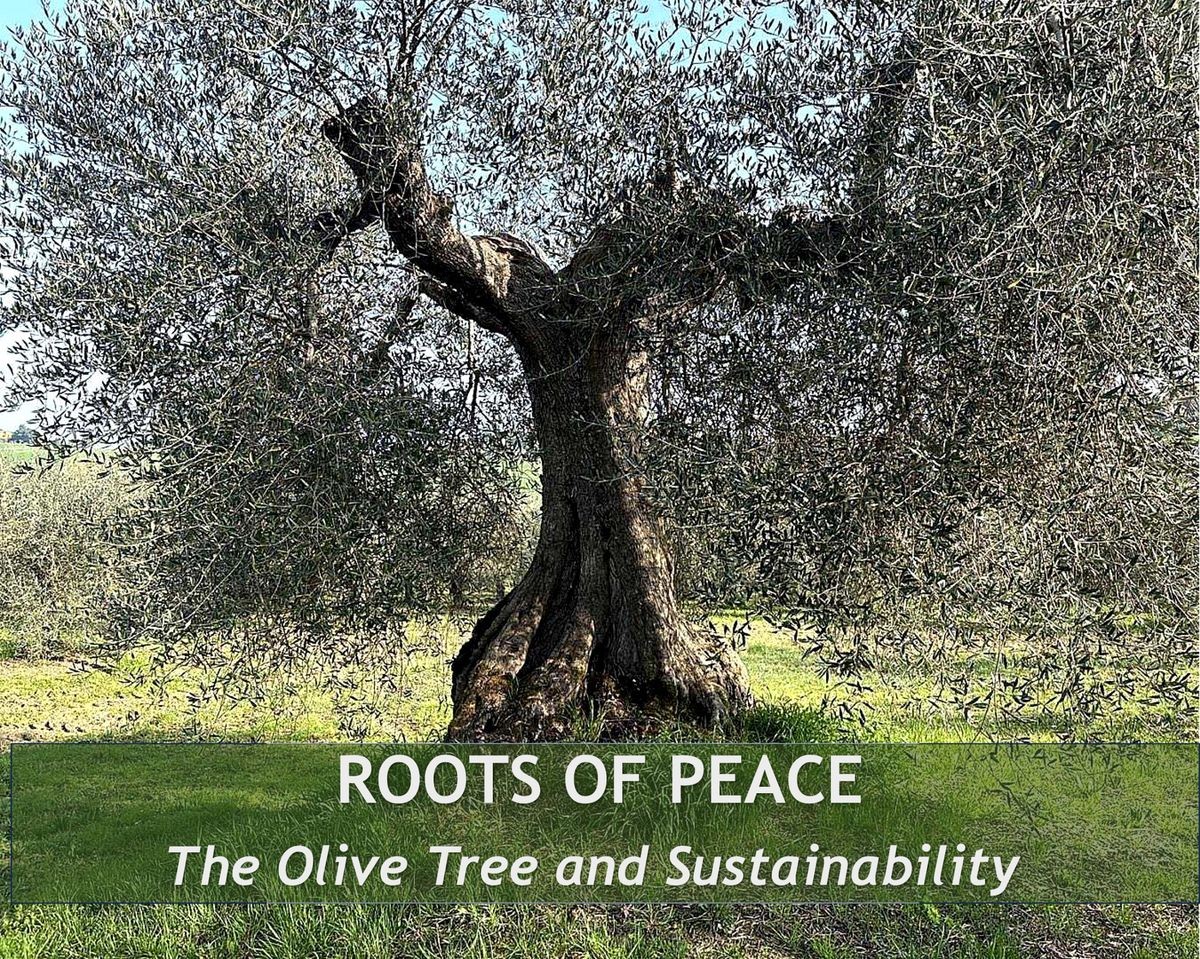
Roots of Peace is a column that tells the cultural history of the olive tree, a plant that has accompanied Mediterranean civilisations and many other cultures around the world for millennia. Through historical episodes, traditions and cultural testimonies, this column explores the connection between the olive tree and the values of peace, coexistence and sustainability.
This month, The Garden of Peace project dedicates the Roots of Peace column to the theme of sustainability. The olive tree is one of the oldest examples of agriculture capable of enduring through time.
A resilient plant
The olive tree is a plant that survives in difficult conditions. It grows on arid, poor and rocky soils where other crops cannot take hold. It withstands drought, wind and intense heat. This capacity for adaptation is at the root of its extraordinary spread across Mediterranean territories.
Over the centuries, farmers selected the varieties best suited to their environments. They learned to work with nature, not against it. This knowledge, accumulated over time, is today a precious resource for facing the challenges of climate change.
The resilience of the olive tree is not only agronomic. It is also cultural. It represents the capacity of communities to adapt, to maintain their roots and to find lasting solutions. An ancient lesson that retains all its value.
An agriculture that endures
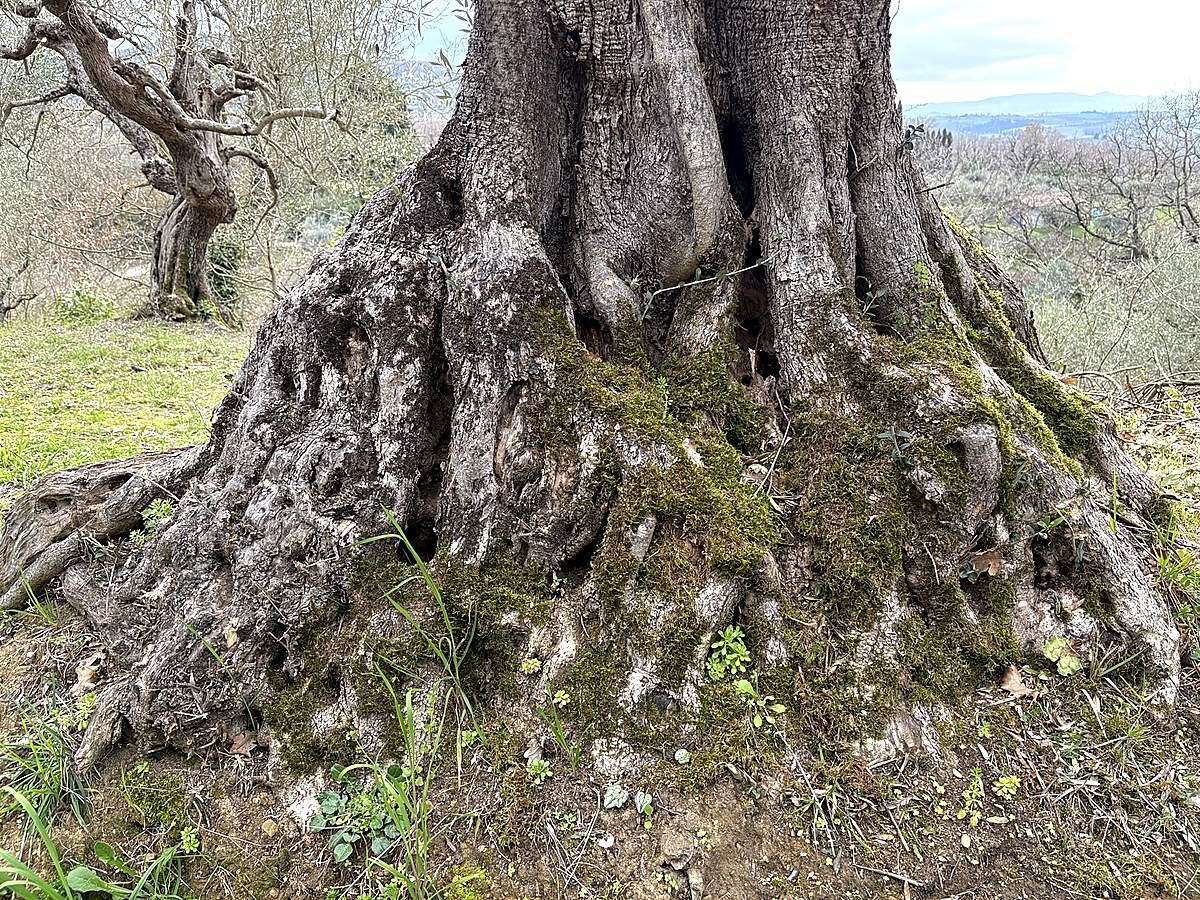
Traditional olive growing has developed low-impact farming techniques over the centuries. Soil cultivation, pruning and manual harvesting are practices that respect the land and preserve biodiversity. These ancient methods anticipate many principles of contemporary sustainable agriculture.
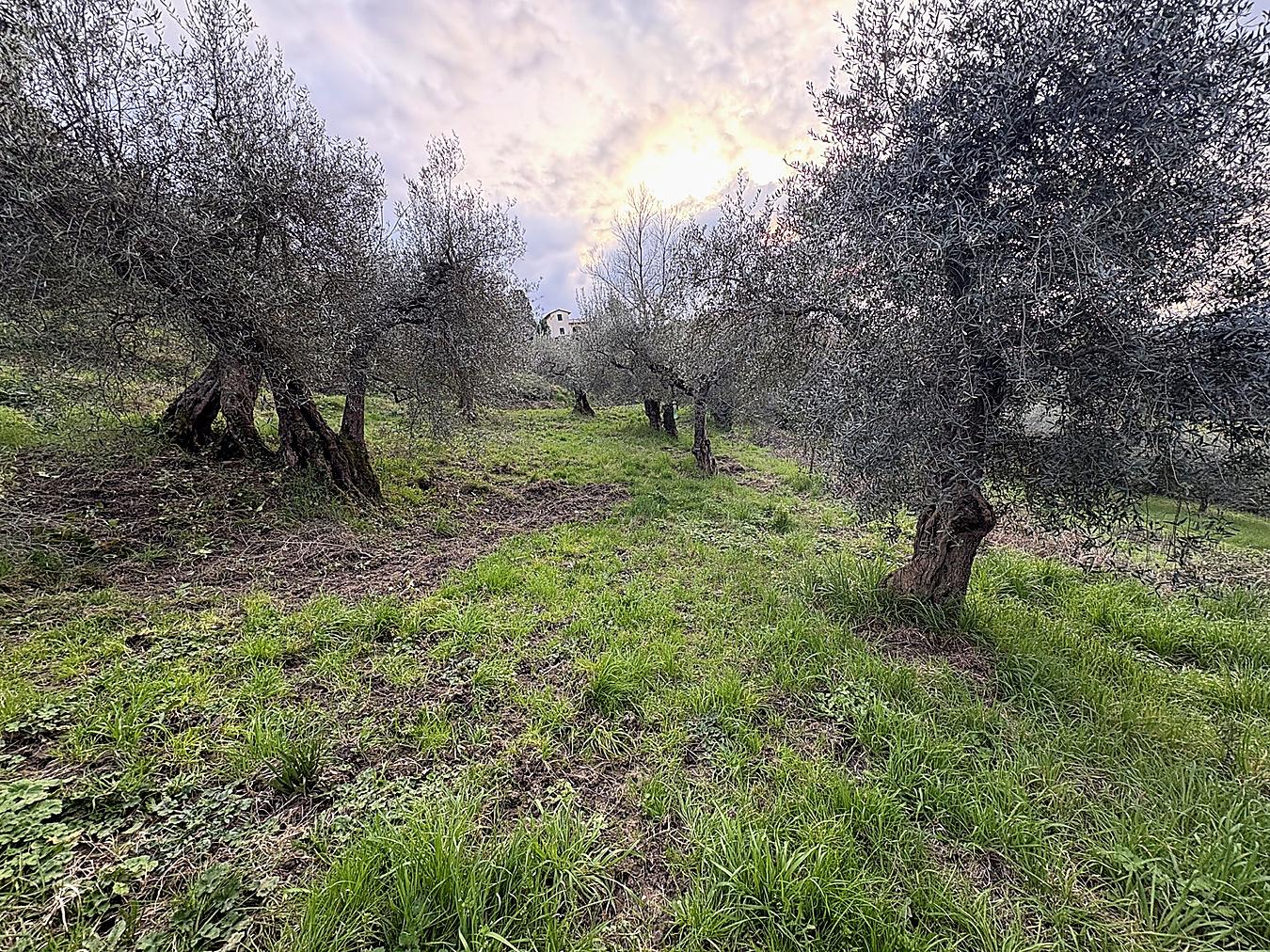
Historic olive groves are complex ecosystems. They host insects, birds, lichens and wild plants. The soil beneath olive trees is rich in microorganisms. This biological diversity is the result of centuries of careful and respectful land management.
The longevity of traditional olive groves is itself a form of sustainability. A centuries-old olive tree does not need to be replanted. It continues to produce, to protect the soil and to sequester carbon. Longevity is one of the fundamental values of this millennial crop.
A model for the future
Today, traditional olive growing is at the centre of growing interest from researchers, farmers and institutions. Ancient techniques are being studied and valued as models for a more sustainable agriculture. The knowledge of olive growers is recognised as intangible cultural heritage.
The Garden of Peace project draws inspiration from this model. Planting olive trees means investing in the long term, building lasting landscapes and creating bonds between different communities. The olive tree is a tree that unites generations and territories through a shared culture.
Looking to the olive tree as a model for the future means recognising the value of what endures. In an age dominated by speed and immediate consumption, olive growing offers a different perspective. A timeless lesson that our time needs to hear.
Conclusion
The olive tree teaches us that sustainability is not a recent achievement. It is an ancient practice, rooted in the cultures of peoples who learned to live in harmony with their land. This knowledge, passed down from generation to generation, is more precious today than ever.
The Roots of Peace column continues this narrative every month. The Garden of Peace project believes that the olive tree, a universal symbol of peace, can still offer our time a vision of the future founded on care, endurance and coexistence.
Next month
In the next Roots of Peace column, in May, we will explore the long millennial journey of the olive tree across civilisations and cultures of the world.