
THE GARDEN OF PEACE PROJECT
From the origins of the Garden of Peace in Paciano to the current international model of “Territories of Peace and Sustainability”
Paciano: where it all began
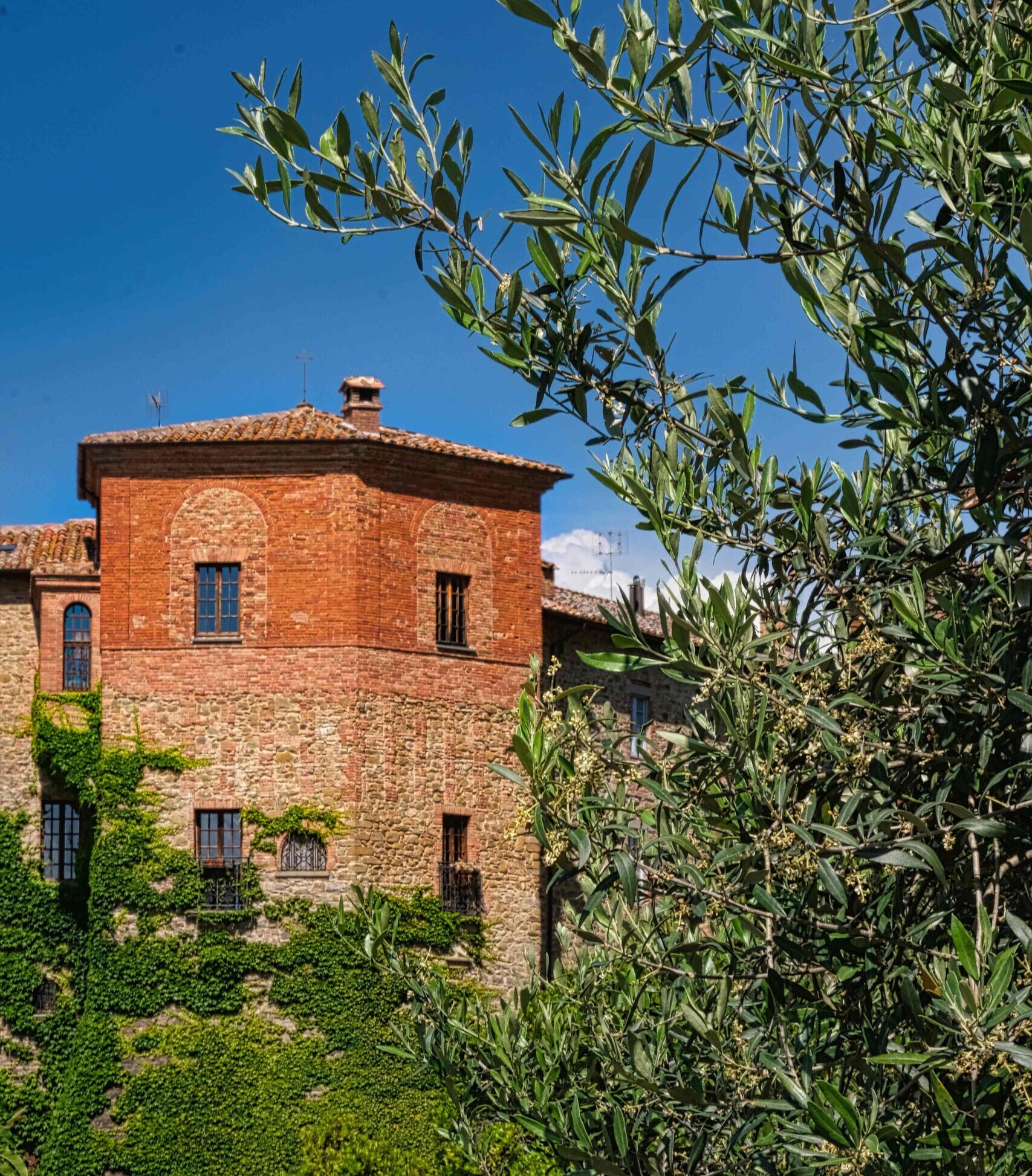
In the Umbrian village of Paciano, overlooking the hills of Lake Trasimeno, the idea took shape of creating Gardens of Peace: real places where the olive tree becomes a tangible sign of harmony and reconciliation. Here, history, landscape, and community provide the ideal ground to test a project that brings together memory, the environment, and shared responsibility.
The first garden is not an endpoint, but a source: from Paciano starts a model that can be replicated elsewhere, maintaining the same core logic—of a small local place that tells global relationships between people and territories.
Janus Bifrons and the double gaze
The figure of Janus Bifrons, symbol of passage and new beginnings, inspires the way the project looks at the world. As Janus turns one face to the past and one to the future, so Paciano brings together roots and transformation.
This “double gaze” is at the heart of the Gardens of Peace: to preserve who we are and, at the same time, to open ourselves to other landscapes and communities. The garden thus becomes a gateway connecting different times and distant territories, inviting us to think of peace as a process in motion, not as a fixed image.
From the village to the network of Gardens of Peace
The Garden of Peace was never conceived as a purely local initiative. From the beginning, the question was: if it works in Paciano, can it work elsewhere too? The answer emerged through encounters with cities, schools, universities, foundations, and small municipalities committed to peace, the environment, and rights.
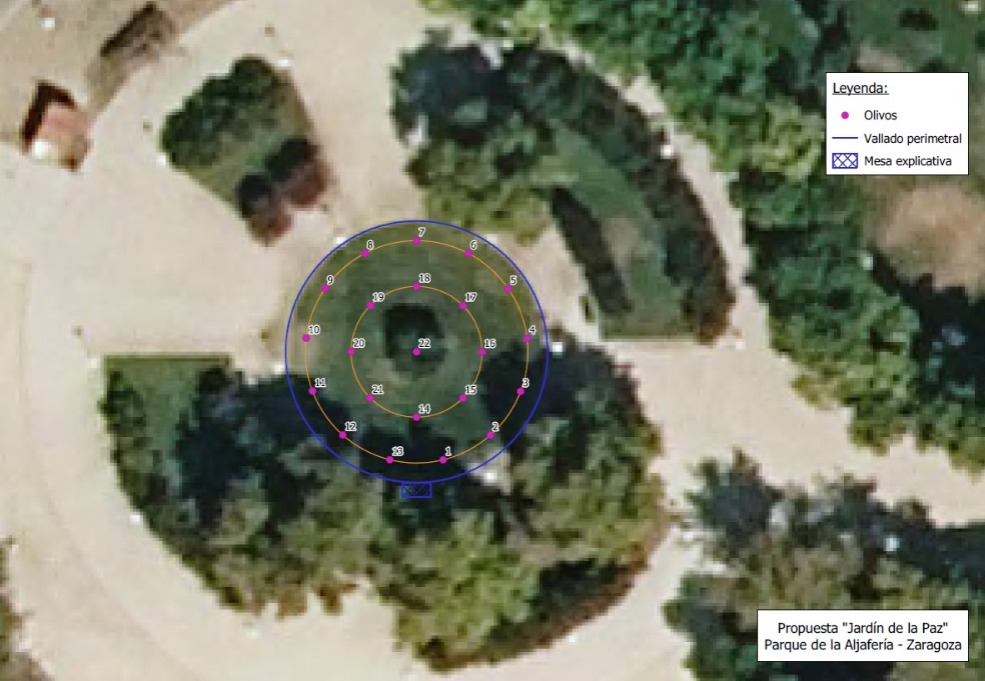
Each new Garden of Peace adopts the same basic framework—21 varieties, 21 countries and territories of diffusion— yet it is embedded in its own landscape and history. In this way, a network of real places takes shape, connected by the olive tree and able to bring distant territories into dialogue without flattening their differences.
The olive tree as a universal language of territories
The olive tree is the heart of the project: a millenary tree that carries the symbols of peace, resilience, and rebirth. From ancient myths to UNESCO recognition, it tells of a peace that survives the wounds of conflict and that, like its deep roots, returns to give life to the earth.
In the Gardens of Peace, the olive tree also becomes a geographic language: it does not look at state borders, but at the territories where it can live. The same variety may be present on more than one continent, following climates and landscapes. From this perspective, we speak of “Territories of Peace and Sustainability”: it is the olive tree that draws the map, not political frontiers.

From the RESGEN project to the 21-variety model
The experience developed within the IOC and the RESGEN project has shown how olive biodiversity can become an opportunity for cooperation among very different territories. From that work comes the 21-variety model: a selection of trees that represent the main areas of olive diffusion worldwide. Taken together, these 21 cultivars account for about 98% of the oil produced globally, linking the garden to almost the entire global olive-oil supply chain.
Bringing the 21 plants together in the same garden allows five continents to be told in a rigorous and accessible way. It is not a decorative collection, but a reasoned synthesis that connects scientific research, agronomy, and a culture of peace. All plants are supplied with a phytosanitary certificate, guaranteeing their health.
Territories of Peace and Sustainability: a living map
Bringing together 21 varieties in one place means turning the garden into a living map. Each tree is connected to one or more territories, so that all continents are represented according to the actual diffusion of the olive tree.
The informational panels placed at the entrance of each Garden of Peace present the overall vision, while the signs beside each plant tell its origin, areas of diffusion, and characteristics. The varieties coexist in the same soil, sharing earth, water, air, and sunlight—what humans often struggle to do. In this silent coexistence lies the heart of the Territories of Peace and Sustainability model.
Every Garden of Peace is an invitation to cultivate relationships, biodiversity, and shared responsibility across territories.
Contact us to learn more