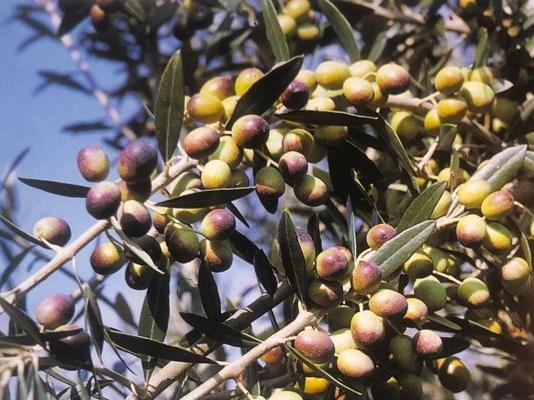
Central Italy: Apennine ridges, inland hills, and high-elevation olive growing
In Europe, Moraiolo is a variety deeply linked to the hilly and
sub-mountain landscapes of central Italy, especially along the Apennine
ridges and inland valleys. Its typical environment is not the wide, hot
plain, but a complex system of hills, crests, and slopes where the olive
tree coexists with woodlands, arable land, and small agricultural plots,
often fragmented and cultivated over generations.
Lean soils, natural drainage, and traditional management
Moraiolo performs at its best on lean, calcareous or stony soils, well
drained and with limited fertility. In these settings, the tree builds
balance and quality through moderate growth, supported by restrained
agronomic practices: regular pruning, close attention to canopy structure,
protection of the soil from erosion, and often earlier harvesting.
The variety fits into non-intensive systems, where long-term continuity
matters more than maximizing yields.
Climate-transition territories and seasonal resilience
A distinctive trait of Moraiolo is its ability to adapt to territories
with colder winters than the Mediterranean coastal zones. This aptitude
makes it a key variety in climate-transition landscapes, where the olive
tree plays a stabilizing agricultural and environmental role. In these
territories, Moraiolo helps consolidate the soil, maintain historic
rows and groves, and preserve a rural biodiversity closely tied to
local identity.