
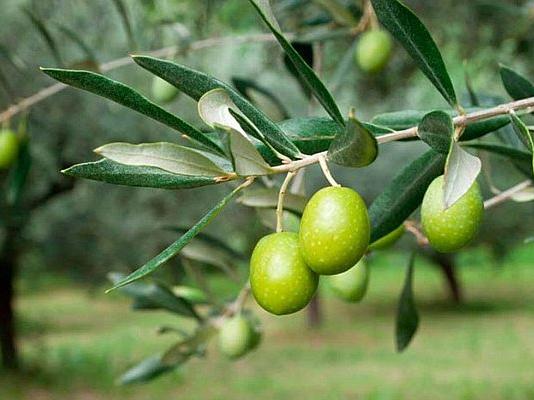
Scientific and varietal section
Zard
Country
Iran
Use
Oil
Continental distribution
Asia
An Iranian variety linked to the olive biodiversity of western Asia
Zard is a traditional olive variety from Iran, connected to the agricultural landscapes of western Asia and to the historical presence of the olive tree in the most suitable areas of the Iranian territory. Its name recalls a cultivar rooted in an ancient cultural context, where agriculture, food culture and local identity are closely intertwined.
Mainly intended for oil production, Zard represents an important component of Iranian olive biodiversity. The variety bears witness to the value of local cultivars as genetic and agricultural heritage, capable of telling the story of the olive tree’s adaptation to specific territories, climates and production practices.
Within the Gardens of Peace, Zard represents Iran and tells of the olive tree as a tree of continuity, memory and dialogue between the cultures of the eastern Mediterranean, the Near East and Asia.
Identity and synonyms
Zard is a traditional Iranian cultivar, identified as one of the varieties connected to Iran’s olive-growing heritage. Its varietal identity belongs to the broader framework of olive genetic resources present in western Asia.
The name may appear with different transliterations in various linguistic and documentary contexts. Correct varietal identification is essential in order to preserve its agronomic profile, avoid terminological confusion and enhance its connection with its territory of origin.
Geographical distribution
The distribution of Zard is mainly linked to Iran, within the olive-growing context of western Asia. The variety belongs to an agricultural heritage in which the olive tree is cultivated in areas characterised by favourable environmental conditions and a long rural tradition.
Its presence helps represent Asian olive biodiversity and the relationship between olive cultivation, Iranian agricultural landscapes and the cultures of the Near East. Zard recalls an olive geography that goes beyond the central Mediterranean and extends eastwards.
Agronomic and commercial considerations
Zard is a variety mainly intended for oil production. From an agronomic point of view, its interest is linked to the conservation of a local cultivar capable of expressing the relationship between olive genetics, cultivation environment and traditional agricultural practices.
The commercial value of the variety depends on the quality of the oil produced, production continuity and the ability to communicate its link with the Iranian territory. In this sense, Zard can contribute to the promotion of identity-based oils and to the protection of local olive resources.
The conservation of this cultivar strengthens the value of biodiversity as a basis for resilient agricultural systems, recognisable productions and authentic territorial narratives. Zard bears witness to the importance of traditional varieties for the future of olive growing.
Territorial presence and cultural value of the variety
Zard is linked to Iran, a territory where agriculture preserves ancient memories and deep relationships between landscape, communities and traditional crops. The variety recalls the value of the olive tree as a plant capable of crossing different regions, climates and cultures.
Within the framework of the Gardens of Peace, this cultivar represents Iran through an olive tree that speaks of roots, continuity and Asian biodiversity. Zard reminds us that every variety preserves a story of people and territory, and that the olive tree can become a universal symbol of encounter and peace.
Cultural and symbolic section
Zard in The Garden of Peace project
Zard represents Iran in the varietal collection of the Gardens of Peace. It brings into the project the voice of western Asia, the agricultural memory of Iranian landscapes and the value of an olive biodiversity capable of uniting ancient roots, local identities and dialogue between cultures.
The olive tree as root, continuity and Asian identity
In The Garden of Peace project, Zard evokes Iran and the role of the olive tree in the agricultural landscapes of western Asia. It is a variety that tells of the bond between cultivation, territory and rural memory, showing how the olive tree can belong to different and distant geographies.
Its presence in the Gardens of Peace reminds us that the olive tree is not only a Mediterranean symbol, but also a tree capable of crossing cultures, regions and traditions. Zard thus becomes a sign of continuity between the East and the Mediterranean.
Biodiversity, territory and dialogue among peoples
Zard reminds us that olive biodiversity is made up of local varieties, adapted to different climates, soils and agricultural cultures. Each cultivar preserves a specific response of the territory and represents a form of knowledge matured over time.
In the Gardens of Peace, this variety dialogues with the other olive trees as a symbol of Asian and Mediterranean plurality. Iran thus enters a shared narrative, in which every tree becomes a bearer of identity, mutual respect and the possibility of encounter.
Education, peace and responsibility
Discovering Zard means approaching a variety that teaches the value of protecting local agricultural heritage. The olive tree becomes an educational instrument for understanding how a cultivar can express history, environment, adaptation and cultural belonging.
In the Gardens of Peace, Zard invites visitors to recognise biodiversity as a shared responsibility. Protecting a variety means protecting the memory of a territory and offering future generations a concrete message of care, dialogue and peace.
The varietal collection of The Garden of Peace brings together the 28 olive varieties represented in the Gardens of Peace around the world. Each Garden may host a specific selection from this collection.