
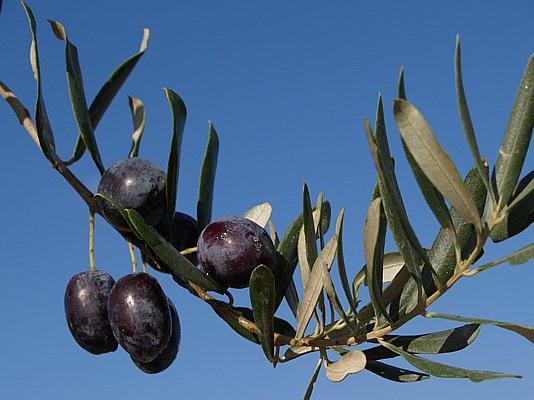
Scientific and varietal section
Gemlik
Country
Turkey
Use
Table olives
Continental distribution
Europe · Asia
A Turkish variety symbolising the bridge between Europe and Asia
Gemlik is one of the best-known olive varieties of Turkey, historically linked to the Marmara region and to the olive-growing landscapes that connect Anatolia, the Balkans and the eastern Mediterranean. Its identity recalls an area where the olive tree has long been part of agriculture, food culture and local community life.
Mainly intended for the production of table olives, Gemlik is appreciated for its connection with traditional processing practices and for the recognisable quality of its fruits. The variety represents an important component of Turkish olive biodiversity and highlights the role of local cultivars in preserving agricultural knowledge and territorial identity.
Within the Gardens of Peace, Gemlik represents Turkey and tells of the olive tree as a living bridge between Europe and Asia, between Mediterranean cultures and Anatolian landscapes, between memory, food traditions and dialogue among peoples.
Identity and synonyms
Gemlik is a traditional Turkish cultivar, strongly associated with the olive-growing heritage of the Marmara region. Its varietal identity is linked to table olive production and to a long history of cultivation in areas where the olive tree is part of everyday life and local food culture.
The name refers to the geographical and cultural context from which the variety takes its identity. In different documentary or commercial contexts, local spellings and references may appear, but correct varietal identification remains essential for preserving its agronomic profile and its link with the territory of origin.
Geographical distribution
The distribution of Gemlik is mainly linked to Turkey, especially to the olive-growing areas around the Sea of Marmara and to other suitable regions of the country. Its geographical position reflects the role of Turkish olive growing as a meeting point between Europe, Asia and the Mediterranean world.
The variety belongs to the olive biodiversity of both Europe and Asia, representing a frontier landscape where agricultural traditions, maritime routes and cultural exchanges have shaped the history of the olive tree. Gemlik therefore expresses a geography of continuity between different regions and civilisations.
Agronomic and commercial considerations
Gemlik is mainly valued as a table olive variety. From an agronomic point of view, its importance lies in the preservation of a cultivar capable of expressing the relationship between local genetics, Turkish olive-growing environments and traditional processing techniques.
Its commercial value is connected to the quality and recognisability of the fruits, to the continuity of production and to the capacity to communicate the link with Turkish olive culture. Gemlik contributes to the promotion of identity-based table olives and to the protection of local olive resources.
The conservation of this cultivar strengthens the value of biodiversity as a foundation for resilient agricultural systems, distinctive products and authentic territorial narratives. Gemlik bears witness to the importance of traditional varieties in the future of Mediterranean and Anatolian olive growing.
Territorial presence and cultural value of the variety
Gemlik is linked to Turkey, a territory where the olive tree belongs to ancient agricultural landscapes, food traditions and the cultural memory of communities that have lived between the Mediterranean, the Aegean, the Marmara region and Anatolia. The variety recalls the olive tree as a plant of continuity and exchange.
Within the framework of the Gardens of Peace, this cultivar represents Turkey through an olive tree that speaks of roots, hospitality and dialogue between continents. Gemlik reminds us that every variety preserves a story of land and people, and that the olive tree can become a universal symbol of encounter and peace.
Cultural and symbolic section
Gemlik in The Garden of Peace project
Gemlik represents Turkey in the varietal collection of the Gardens of Peace. It brings into the project the memory of Anatolian olive growing, the cultural strength of the Marmara region and the value of an olive tree capable of connecting Europe and Asia through food traditions, biodiversity and dialogue.
The olive tree as a bridge between Europe and Asia
In The Garden of Peace project, Gemlik evokes Turkey and the deep relationship between the olive tree, Anatolian landscapes and the shores of the Marmara Sea. It is a variety that speaks of continuity, agricultural roots and cultural exchange.
Its presence in the Gardens of Peace reminds us that the olive tree can become a living bridge between continents. Gemlik expresses this vocation clearly: it belongs to a land where Europe and Asia meet, and where the olive tree becomes a sign of dialogue and shared memory.
Biodiversity, food culture and dialogue among peoples
Gemlik reminds us that olive biodiversity is also preserved through food traditions, processing techniques and the everyday knowledge of local communities. A table olive variety is not only an agricultural resource, but also a cultural expression of taste, care and identity.
In the Gardens of Peace, this variety dialogues with the other olive trees as a symbol of Mediterranean and Anatolian plurality. Turkey enters a shared narrative in which each cultivar becomes a bearer of diversity, hospitality and the possibility of encounter.
Education, peace and responsibility
Discovering Gemlik means approaching a variety that teaches the value of protecting local agricultural heritage and the traditions connected to it. The olive tree becomes an educational instrument for understanding how a cultivar can express history, environment, food culture and belonging.
In the Gardens of Peace, Gemlik invites visitors to recognise biodiversity as a shared responsibility. Protecting a variety means protecting the memory of a territory and offering future generations a concrete message of care, dialogue and peace.
The varietal collection of The Garden of Peace brings together the 28 olive varieties represented in the Gardens of Peace around the world. Each Garden may host a specific selection from this collection.