Hojiblanca
Country: Spain
Use: Dual purpose
Synonyms: “Casta de Cabra”, “Casta de Lucena”, Lucentino”

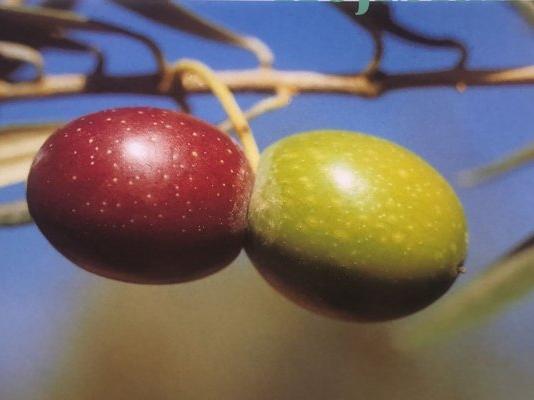
Country: Spain
Use: Dual purpose
Synonyms: “Casta de Cabra”, “Casta de Lucena”, Lucentino”
Distribution: 2 continents
A structuring cultivar of Andalusian olive territories
In Europe, Hojiblanca is a cultivar deeply linked to southern Spain and, in particular, to Andalusia. Here its presence is not occasional but structural: entire olive-growing areas have developed around this cultivar, which strongly shapes the agricultural landscape.
Its European rooting belongs to a Mediterranean context where the olive tree is a stable cultural element. Hojiblanca takes part in complex agricultural systems in which cultivation, processing, and rural organization are the result of long-standing social and historical continuity.
Within The Garden of Peace, Hojiblanca in Europe represents a mature form of territorial biodiversity: a cultivar that speaks of permanence rather than migration. Its narrative value lies in the close relationship between variety, farming communities, and specific territories that preserve a strong local olive identity over time.
A Mediterranean cultivar adopted in new olive landscapes
In Oceania, Hojiblanca is present as an introduced cultivar within olive-growing systems developed in more recent times, particularly in contexts where Mediterranean models have been adapted to new environments.
Here the variety does not represent historical continuity, but a deliberate choice made by farming communities that selected European cultivars to build new production chains. Hojiblanca becomes part of a composed varietal mosaic, where identity is shaped through adaptation and territorial experimentation.
For The Garden of Peace, Hojiblanca’s presence in Oceania helps tell a story of adoption: a cultivar that crosses hemispheres and is reinterpreted within new landscapes and new farming communities, without automatically transferring the historical meaning of its place of origin.
Agronomic and commercial considerations:
A variety with high rooting capacity, resistant to calcareous soils. It is considered rustic due to its resistance to aridity and its tolerance to winter cold.
The onset of bearing is medium. Flowering time ranges from mid to late; the variety is self-fertile, with pollen of medium quality.
Ripening occurs late. Productivity is high but alternate. The fruits show strong resistance to detachment, which makes mechanical harvesting difficult. They have a dual purpose and, due to the firmness of the flesh, are considered very suitable for Californian-style black table olive processing. Oil content is low, although the product is highly appreciated for its quality. Separation of the flesh from the pit is difficult.
The variety is considered susceptible to peacock spot, olive knot, and verticillium wilt, and it is also poorly resistant to olive fruit fly and olive leprosy.