
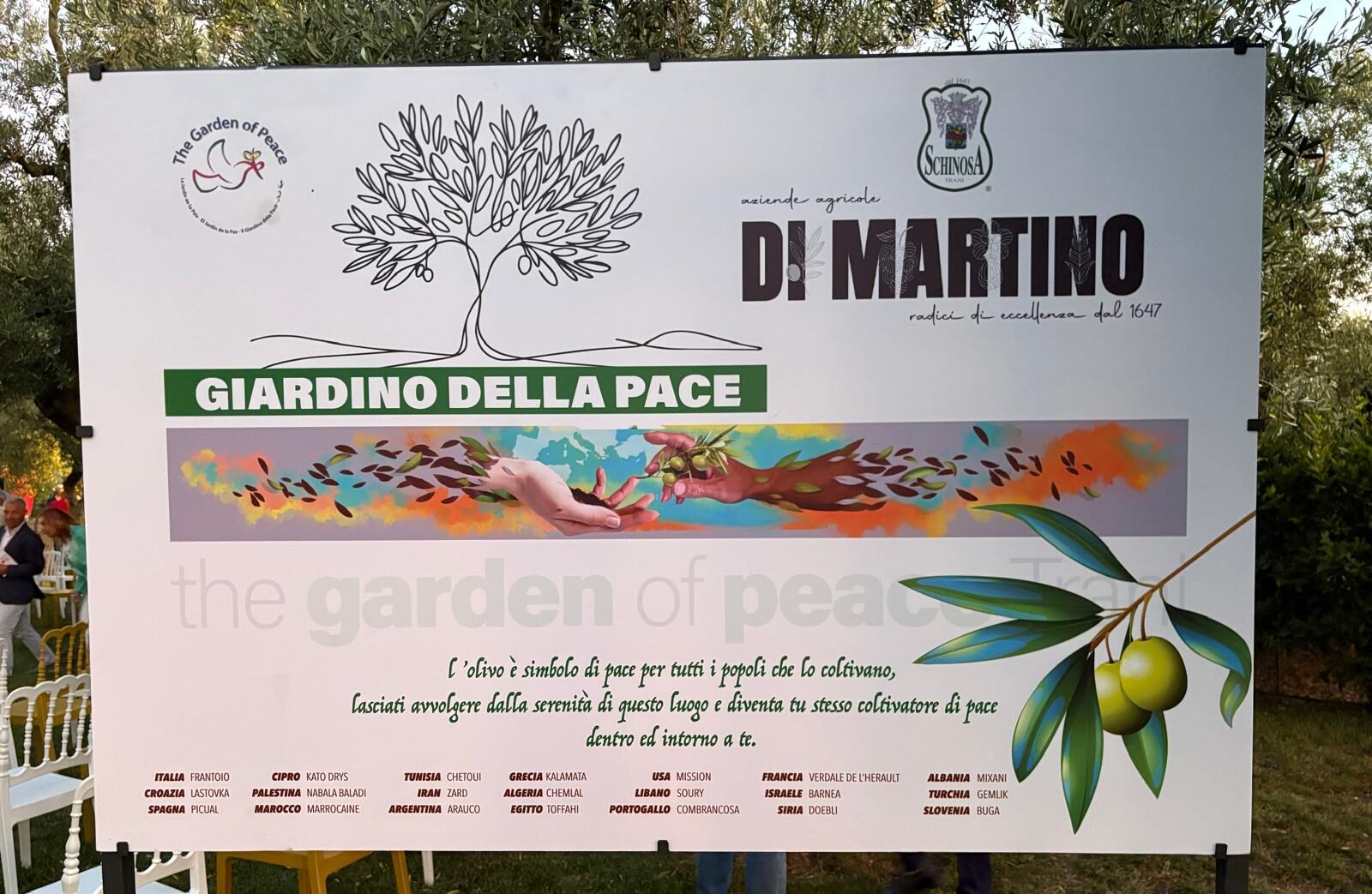
05 Jul IN TRANI, ITALY, THE FIRST GARDEN OF PEACE IN APULIA IS BORN
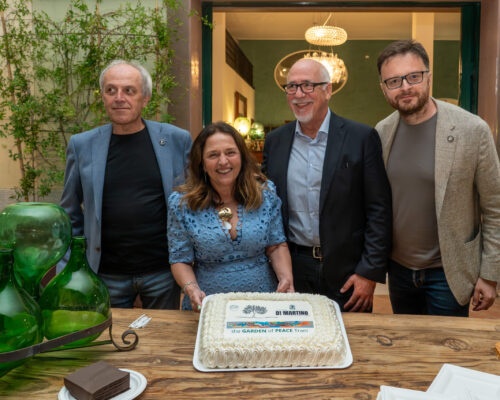
On 12 June 2026, the Garden of Peace of Trani was inaugurated at the Schinosa Olive Estate of the Di Martino Agricultural Companies. It is the first Garden of Peace created in Apulia and a new, important step in the international network promoted by The Garden of Peace – TGoP.
Different roots in the same soil
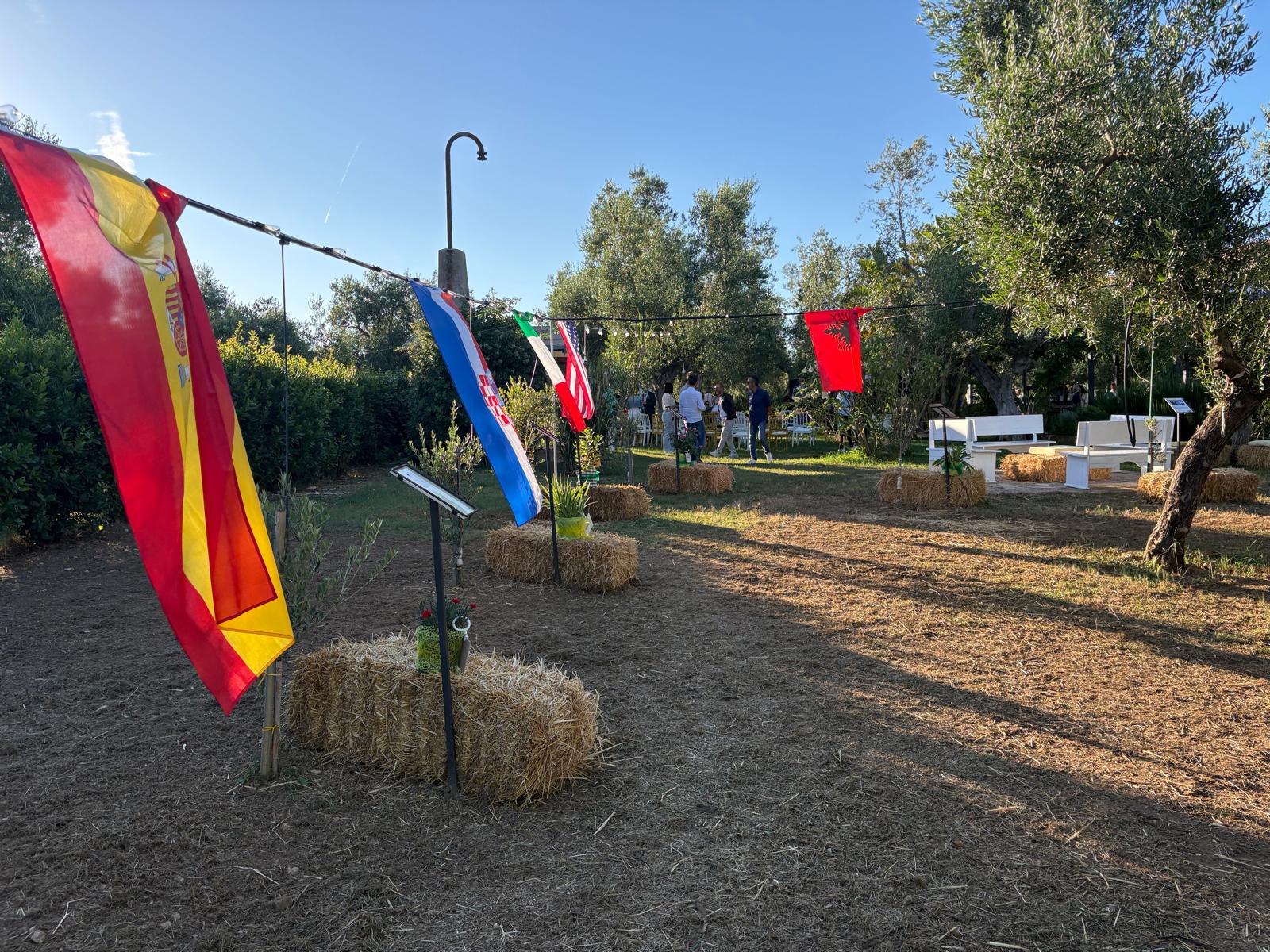
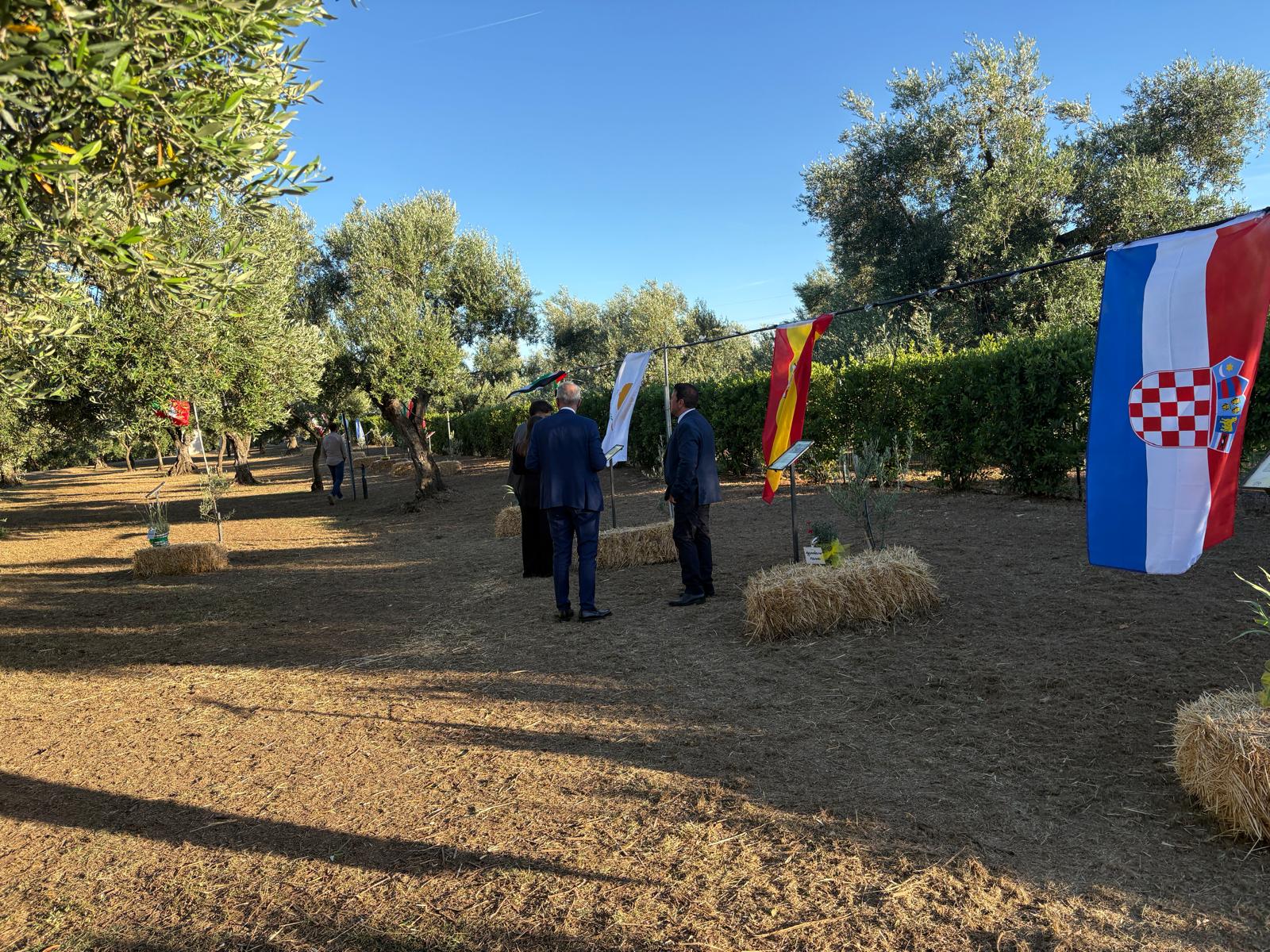
The new garden brings together 21 olive varieties from 21 different countries. Each tree is accompanied by the flag of the country it represents and is placed in an area enriched with flowers and plants linked to its land of origin.
This is not just a botanical collection. These olive trees come from different varieties and different places, but they grow side by side, sharing the same soil, the same water and the same light.
This is the simple and concrete image at the heart of The Garden of Peace project: diversity should not be erased, but known, respected and turned into a real possibility for living together.

The olive tree as a bridge between cultures and religions
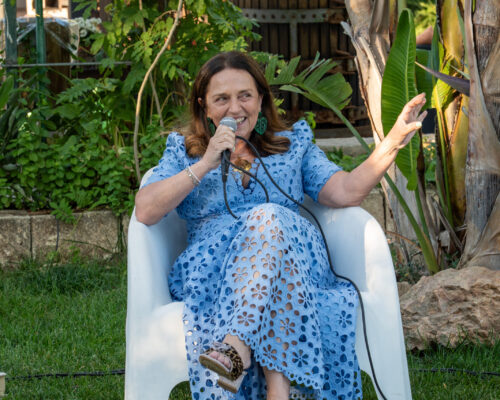
The opening ceremony brought together representatives of the three great monotheistic religions — Judaism, Christianity and Islam — all connected by the deep spiritual, historical and cultural value given to the olive tree.
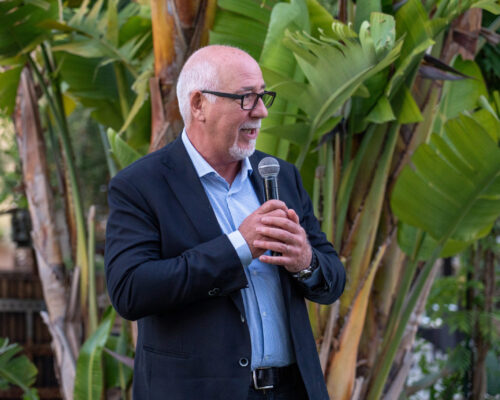
The words of Father Franco Lorusso, Rabbi Cesare Moscati and Nehayah Sh. Almuhaisin, who spoke about the beauty and history of Jordanian olive trees, showed how this ancient tree can still become, today, a shared language between different cultures, traditions and peoples.
In a time marked by wars, conflict and new divisions, the Garden of Peace of Trani wants to remind us that building peace means, first of all, creating real opportunities for listening, understanding and mutual respect.
A project that has become reality
The birth of the Garden of Peace of Trani was made possible by the determination and sensitivity of Dr. Maria Francesca Di Martino, who welcomed the project into her farm, turning land dedicated to olive growing into a place open to dialogue, culture and education.
To her, to her family and to the whole team of the Di Martino Agricultural Companies, The Garden of Peace association offers its heartfelt thanks for the work carried out, for the care given to the young trees and for believing in the deeper meaning of this initiative.
Special thanks also go to Annamaria Tucci and Francesca Corraro, who guided and coordinated the day’s speeches with sensitivity and professionalism, and to Antonio Pistillo, for his valuable work in building relationships and promoting the local area.
The participation of institutions and the olive-growing world
The ceremony was attended by representatives of the institutions and by people committed to promoting olive growing, the local area and dialogue among peoples, including:
Senator Gisella Naturale, president of the Parliamentary Intergroup on strategies for the development and promotion of the olive-growing sector;
Member of the European Parliament Michele Picaro;
Hon. Giandonato Kurtz La Salandra;
Dr. Francesco Paolo Vania;
and Prof. Enzo Perri, one of Italy’s most respected scholars in the field of olive growing.
Their presence showed the attention given to a project that brings together biodiversity, education, olive-growing culture and international cooperation.
A living heritage for Trani and Apulia
The Garden of Peace does not end its journey on the day of its inauguration. In fact, that is exactly when its life begins.
The olive trees will need to be cared for, observed and supported as they grow. The garden can become an educational space for schools, a meeting place for the community and a starting point for cultural, scientific and social initiatives.
In this way, Trani and Apulia enter the international network of the Gardens of Peace, joining other places that have chosen to entrust the olive tree with a universal message of coexistence.
Peace needs roots
A Garden of Peace is not a still monument and it is not a slogan.
It is a living place, meant to grow slowly over time. Each tree represents a country, but no tree lives apart from the others.
Their roots share the same soil.
Their growth reminds us that peoples too, without giving up their own identity, can learn to live side by side.