KALAMATA
Country: Greece
Purpose: Table olive
Synonyms: “Aetonychalea”, “Aetonychi”, “Aetonycholia”, “Chondrolia”, “Kalamon”, “Kalamatiani”

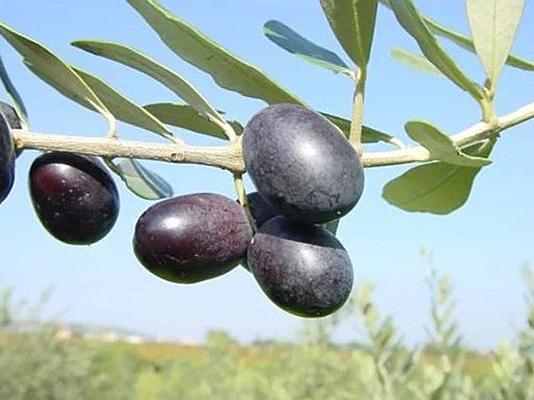
Country: Greece
Purpose: Table olive
Synonyms: “Aetonychalea”, “Aetonychi”, “Aetonycholia”, “Chondrolia”, “Kalamon”, “Kalamatiani”
Distribution: 5 continents
Presence within Mediterranean olive zones and structured plantings
In Africa, Kalamata is documented within olive-growing areas where the olive tree is already part of the agricultural landscape, especially across Mediterranean belts and organised production zones. The cultivar appears as a recognisable reference within the black table-olive segment, alongside local varietal heritage.
Its presence is typically driven by value-chain choices (Kalamata-style processing and black-olive markets) rather than by indiscriminate spread: it enters territories that already share compatible agronomic and processing cultures, and it remains a selected option within established systems.
For TGoP, Africa tells a “measured migration”: not replacement, but a careful cultural graft into consolidated olive landscapes, where adoption makes sense only when territorial continuity is real (climate, know-how, processing capacity).
A table-olive cultivar adopted in extra-Mediterranean olive regions
In the Americas, Kalamata is present as a cultivated and recognisable variety, especially in areas where olive growing has expanded through modern orchards and strong attention to food processing. It is frequently associated with black table olives and with processing techniques that preserve its identity.
Here, the cultivar often appears where the goal is not only production but product legibility: the variety becomes a style marker and a processing reference (cuts, brine, and related steps).
Within TGoP, the Americas highlight a “value-chain migration”: the variety travels together with know-how (processing and markets) and stabilises where the territory supports continuity, without losing recognisability.
Introductions and cultivation in emerging olive territories
In Asia, Kalamata is documented in contexts that combine experimentation and consolidation, through targeted planting and management programmes. The cultivar appears as a cultivated option also beyond the classic Mediterranean basin.
In these territories, the key is not “ancient tradition” but the building of new compatibilities: water management, harvesting organisation, and processing capacity are decisive in defining where and how a cultivar can stabilise.
For TGoP, Asia shows a territory-led migration: the cultivar establishes where projects and conditions can support it over time, turning introduction into a stable relationship between farming, landscape, and communities.
Origin territory and Mediterranean identity
In Europe, Kalamata (Kalamon) is tied to the Mediterranean and, in particular, to Greece, where the cultivar is historically linked to olive landscapes and to black table-olive tradition. Here, varietal identity is inseparable from established harvesting and processing practices.
European presence is therefore rootedness: not “expansion”, but territorial continuity in which cultivar, communities, and food culture reinforce one another and shape a recognisable profile.
In the TGoP model, Europe is the identity benchmark: it shows how a cultivar can be “territory” before it becomes a product, and how roots can generate dialogue without losing coherence.
Adoption in recent olive industries with a Mediterranean imprint
In Oceania, Kalamata is cultivated in territories where olive growing is relatively recent yet well organised, with modern orchards and strong focus on final product quality. The cultivar appears among the recognised varieties used by local value chains.
In these landscapes, the cultivar becomes a bridge between Mediterranean models and new agricultural geographies: the territory gradually builds skills and styles, and the variety functions as a clear reference also for distant markets.
For TGoP, Oceania tells a consolidation migration: the olive arrives as a practice, not only as a symbol, and stabilises over time, creating new continuities between landscape, processing, and communities.
Agronomic and commercial considerations: It is a late ripening variety and harvesting takes place when the fruit has fully completed its maturity. Although it is a dual-purpose variety, it is mainly cultivated as a black table olive. It is considered a very productive variety, even though it is alternating. The fruit is resistant to treatments and other manipulations, and can be dressed in different ways, but always as a black table olive “Greek” style. The ratio between the pulp and the seed is high and the separation between them is easy. The oil yield is medium and the product is of an outstanding quality. It offers a medium resistance to cold climates, but it doesn’t tolerate excessive hot ones. It is quite susceptible to olive leaf spot (Cycloconium oleaginum), while it is resistant to olive knot (Pseudomonas savastanoi).