
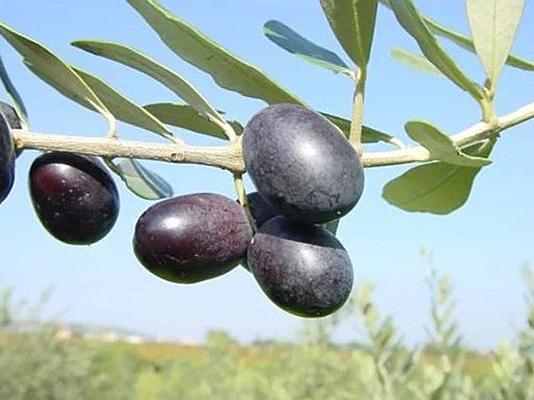
Varietal profile
Scientific and varietal section
Kalamata
A Greek variety that symbolizes table olives
Kalamata is one of the best-known Greek cultivars in the world, particularly linked to the Peloponnese and to the tradition of table olives. Its name evokes a territory strongly identified with the olive tree, where landscape, agriculture and Mediterranean food culture are deeply intertwined.
The variety is appreciated for its distinctive fruits, its gastronomic value and the role it has played in the international spread of Greek olives. Its identity is built around fruit quality, processing methods and commercial recognition.
Within the Mediterranean olive heritage, Kalamata represents a cultivar of strong cultural and economic value, capable of linking biodiversity, production traditions and the international image of Greece.
Identity and synonyms
Kalamata is a cultivar originating from Greece, mainly intended for table olive production. It is one of the most internationally recognised Greek varieties and represents an important reference point for Hellenic olive-growing traditions.
It is also known by denominations linked to its cultivation area and local traditions. Nevertheless, the name Kalamata remains the most widespread and identifiable designation in international markets.
Geographical distribution
The distribution of Kalamata is linked to Europe and particularly to Greece, where the variety is especially associated with olive-growing areas of the Peloponnese. Its fame has led to broad international recognition, especially within the table olive sector.
The presence of this cultivar testifies to the historical role of Greece in Mediterranean olive culture and in the culinary valorisation of the olive fruit.
Agronomic and commercial considerations
Kalamata is a table olive cultivar appreciated for fruit quality, distinctive shape and strong commercial recognition. Agronomic management must support balanced production, adequate fruit size and harvesting practices consistent with its food destination.
Final quality depends significantly on harvest timing, fruit health, proper processing and storage conditions. For this reason, the processing chain plays a central role in the commercial valorisation of the variety.
From a market perspective, Kalamata is one of the best-known and most requested table olives, capable of representing Greek gastronomic identity while maintaining a strong connection between territory, product and international recognition.
Territorial presence and cultural value of the variety
Kalamata represents one of the strongest symbols of Greek olive cultivation. Its presence tells the story of the relationship between Mediterranean landscapes, food traditions, agricultural culture and the continuity of local communities.
Within the Gardens of Peace, Kalamata recalls the value of the olive tree as both an ancient and contemporary symbol of Mediterranean civilisation, capable of connecting territories, memory and biodiversity.
The Garden of Peace
Cultural and symbolic section
Kalamata in The Garden of Peace project
Kalamata invites us to see the olive tree as a presence capable of linking the ancient memory of Greece, the Mediterranean culture of food and the contemporary value of biodiversity.
The olive tree as a shared language
Within The Garden of Peace project, Kalamata recalls the olive tree as a shared language of the Mediterranean. Its presence within the international collection testifies to the bond between Greece, olive civilisation and food traditions capable of crossing borders and generations.
Biodiversity and dialogue
In the Gardens of Peace, Kalamata represents biodiversity as an encounter between varieties, territories and gastronomic cultures. Each olive tree preserves a different story and contributes to building a shared narrative founded on knowledge, respect and the continuity of traditions.
Education and responsibility
The presence of Kalamata in The Garden of Peace project becomes an invitation to recognise the cultural value of the olive tree and of the cultivars that have shaped landscapes, economies and identities. Preserving biodiversity means transmitting memory, knowledge and responsibility to future generations.
The varietal collection of The Garden of Peace includes the 28 olive varieties represented in the Gardens of Peace around the world. Each Garden may host a specific selection of this collection.